Piano music - what it is?
· Nikolay Tsolov
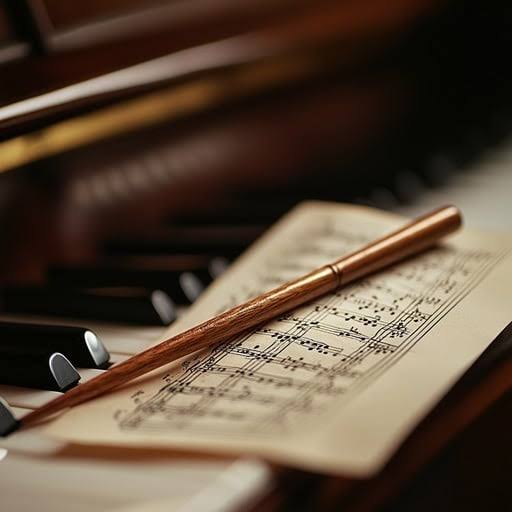
The piano music is a big, big world and a good question is where and how to start.
There are thousands of piano books, a lot of them promising you to learn the instrument quickly and soon play your favourite song or even keyboard editions that can do that in hours. Like always there are two ways 🙂 Both ways have benefits and disadvantages.
The EASY WAY is to squeeze your wishes and for a short time be proud of playing one or a few songs and learning them mechanically. Go get a keyboard. Visit YouTube channels that promise you to learn fast and impress yourself and your friends with how good you are for a short time. This way is nice for the short-term success of just having fun pretending you can play. A benefit of this way is that for a short time, you can have certain songs done.
The disadvantage of doing this is that you won't have a basis and systematic info on how to go on 🙂
The SERIOUS WAY is to invest time and knowledge and go deeper into teaching yourself.
Let's look at the serious way, which would bring you much further in playing piano. It will get you deeper and closer to a professional understanding of what you and the others do.
Here is some useful advice before you start.
Listen to great piano pieces you love to hear in the media. Think how happy you'd be if you were able to play those pieces. Go to quality live concerts of your favourite music and focus on the pianists on the stage. Try to listen to and look closely at what the pianist does. Close your eyes and feel the music.
Look around you to find a good teacher close to your place. Do a trial lesson with the teacher.
Decide if you want to do that. Don't forget it will cost you time and money.
If you have done any of the above, you are already welcome in the big music and piano community and the door is open. No matter how far you go, you will be in touch with this till the end of your life 🙂.
When you start, you will notice that you need to use piano books. Understanding notation and chords is crucial when you play this instrument. Playing with other musicians is important too. The further you go with scores and chords the better you can play and understand the music.
Which piano books to use?
There are hundreds of piano schools, methods and books available now. I will focus on the important.
There are six main directions that can give a wide horizon for learning piano.
1. Playing scales and chords / already mentioned in the previous One Day Tip/ - Pure technical exercises. Boring but thankful work for you.
2. Playing etudes - technical work which improves the positioning and technique, also reading scores.
3. Playing J. S. Bach - Exploring the art of voice movements called polyphony. That is a perfect exercise for the brain and also for the fingers 🙂
4. Playing Classical pieces / Haydn, Mozart, Beethoven or similar/ - good for learning the classical forms and rules.
5. Playing a piece of Romantic music period - /Shopin, Shuman, Brahms, Tchaikovsky or similar/ - to learn how the music was beautifully developed and changed after Classic.
6. Playing modern music pieces - YOUR choice - YOUR pleasure.
Those six directions shall be balanced regarding your own learning tempo, your interest and done together with your teacher. Having all of those directions is not a must but the more you do the farther you go with the piano playing.
I tried to give an overview of what a good basis is for learning the instrument. Having my 25-year routine, I like to pass my tips to anyone interested in playing piano.